
Joshua Unfiltered
The show where we take the news of the moment and put it in a longer story, so it actually makes sense.
Hosted by Sir Joshua The Historian
The show where we take the news of the moment and put it in a longer story, so it actually makes sense.
Hosted by Sir Joshua The Historian
Five lessons on how one church became fourteen traditions. The series opens with the word itself — the protest at Speyer in 1529 and the five 'alones' — then walks the four Reformation families, the American revival that remade them, the experiments that struck out on their own, and the Third Awakening, whose road lands at the non-denominational church. Listen in order, or start anywhere. A glossary of key terms travels with the series.
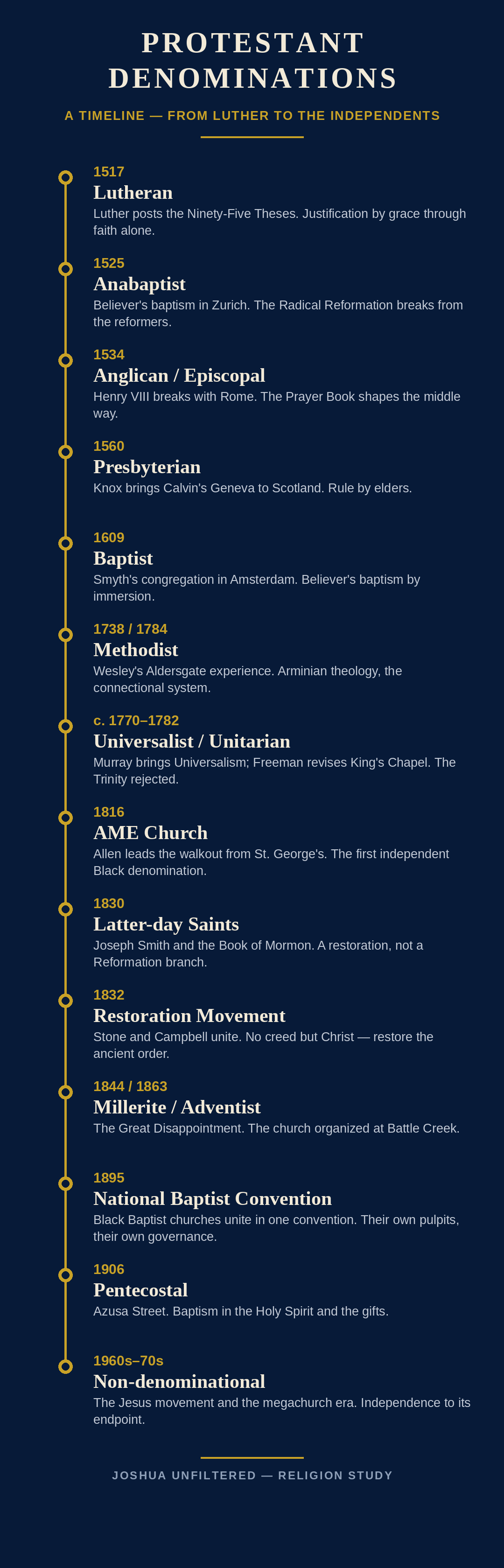
All fourteen traditions of the study, in the order they arrived — from Luther's protest in 1517 to the non-denominational turn of the 1960s and 70s. Tap the image for the full-size version.
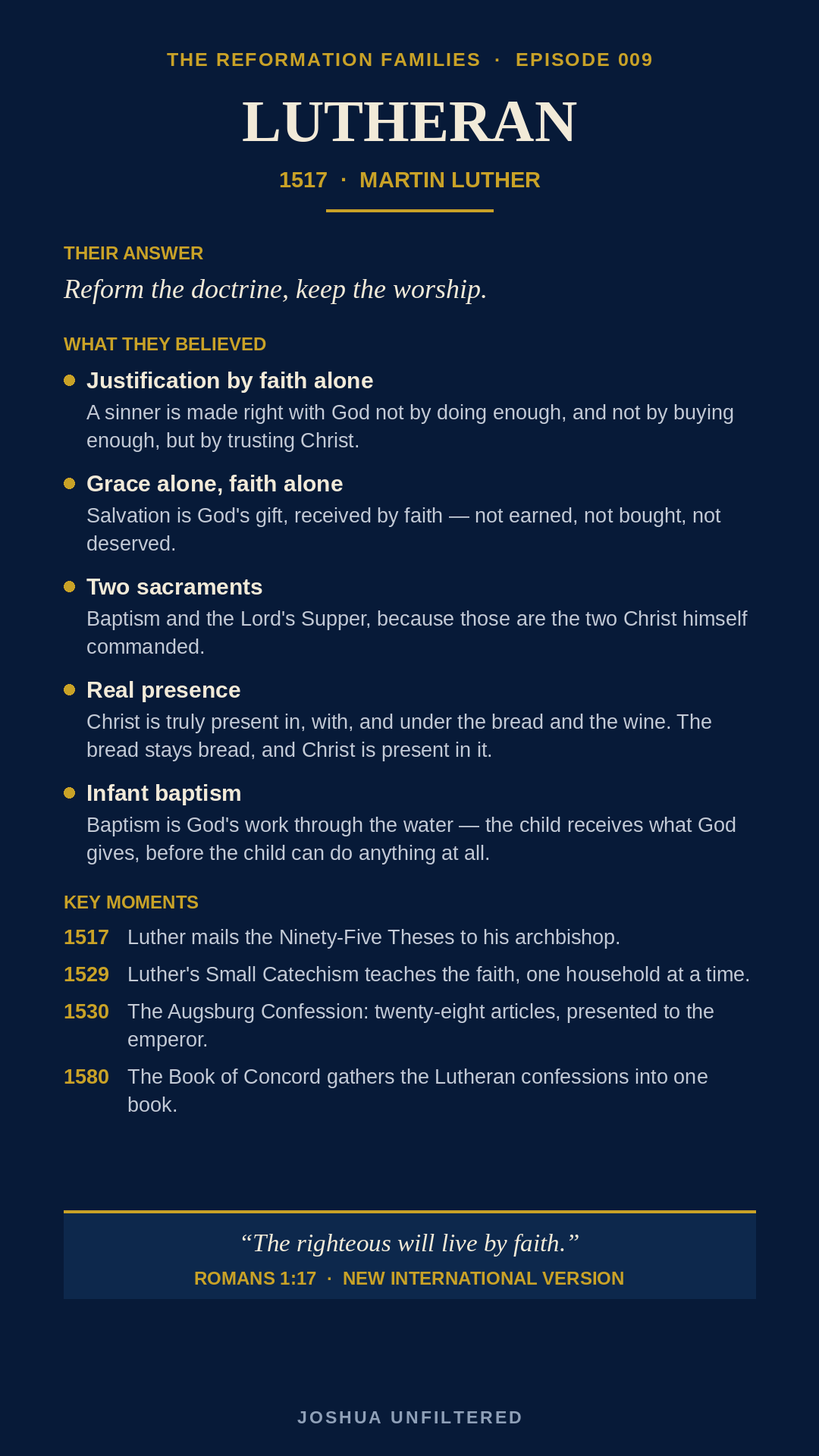
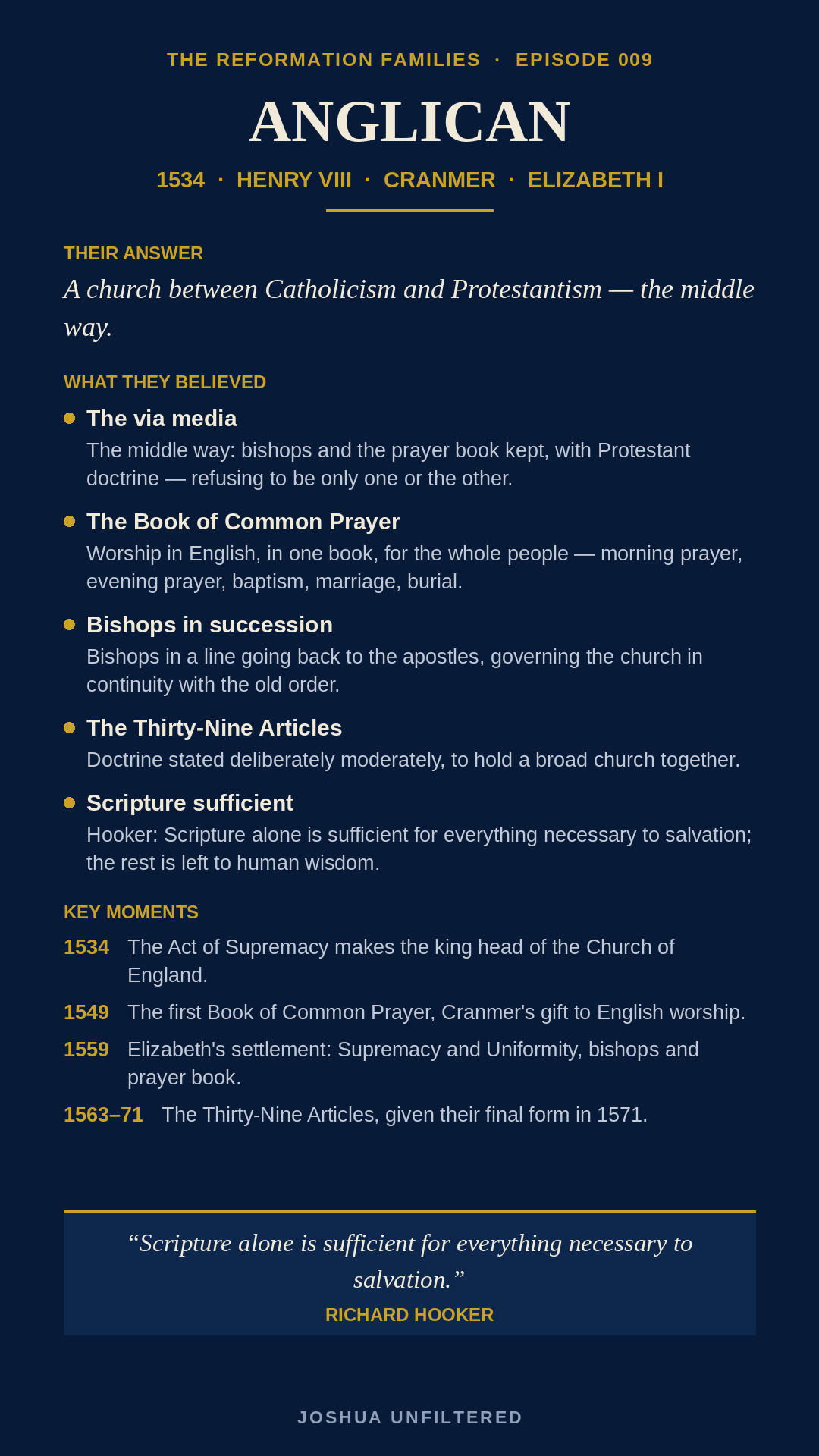
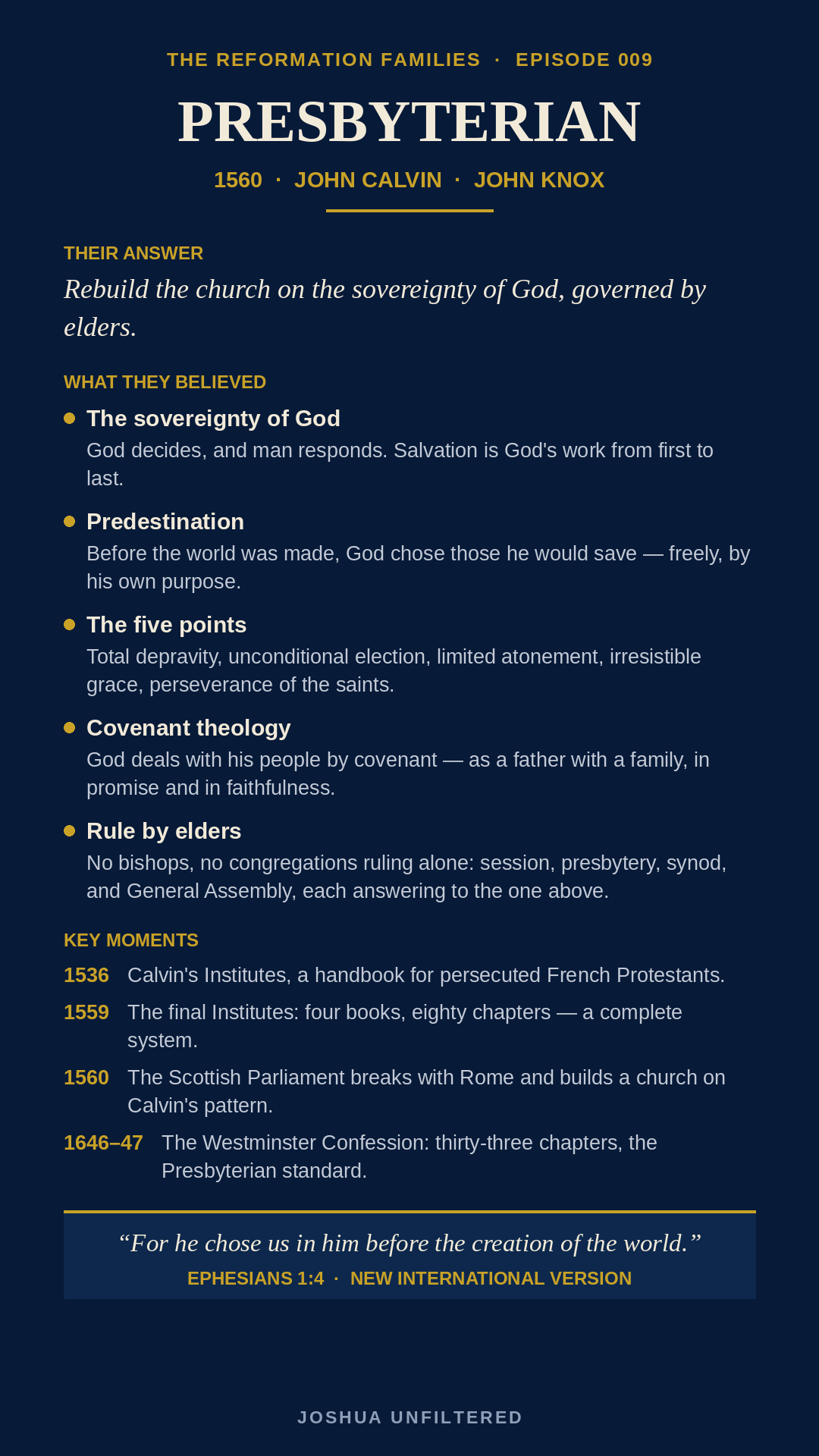
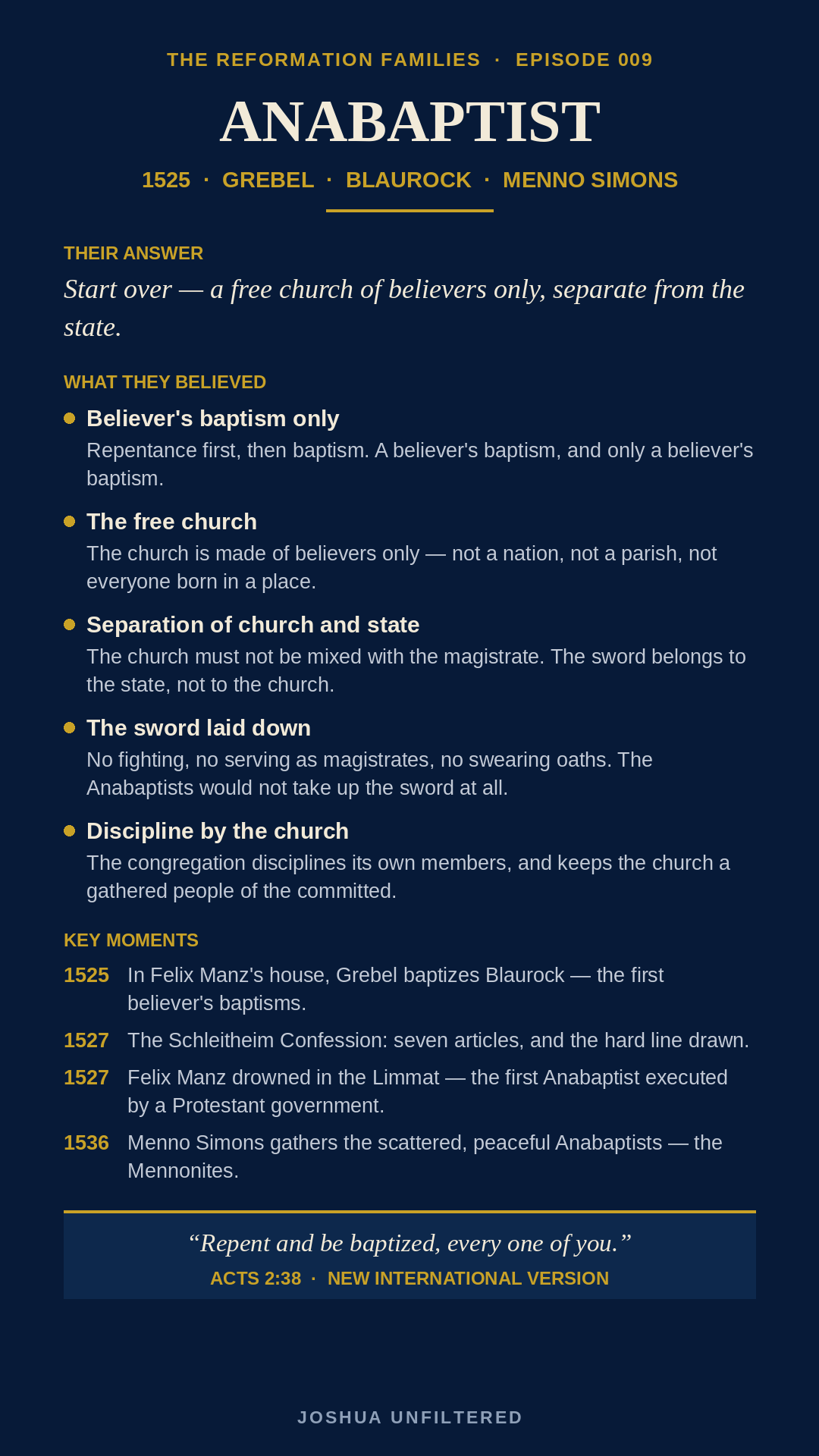
From Episode 009: one protest, four answers to Rome. Tap any card to open the full-size image.
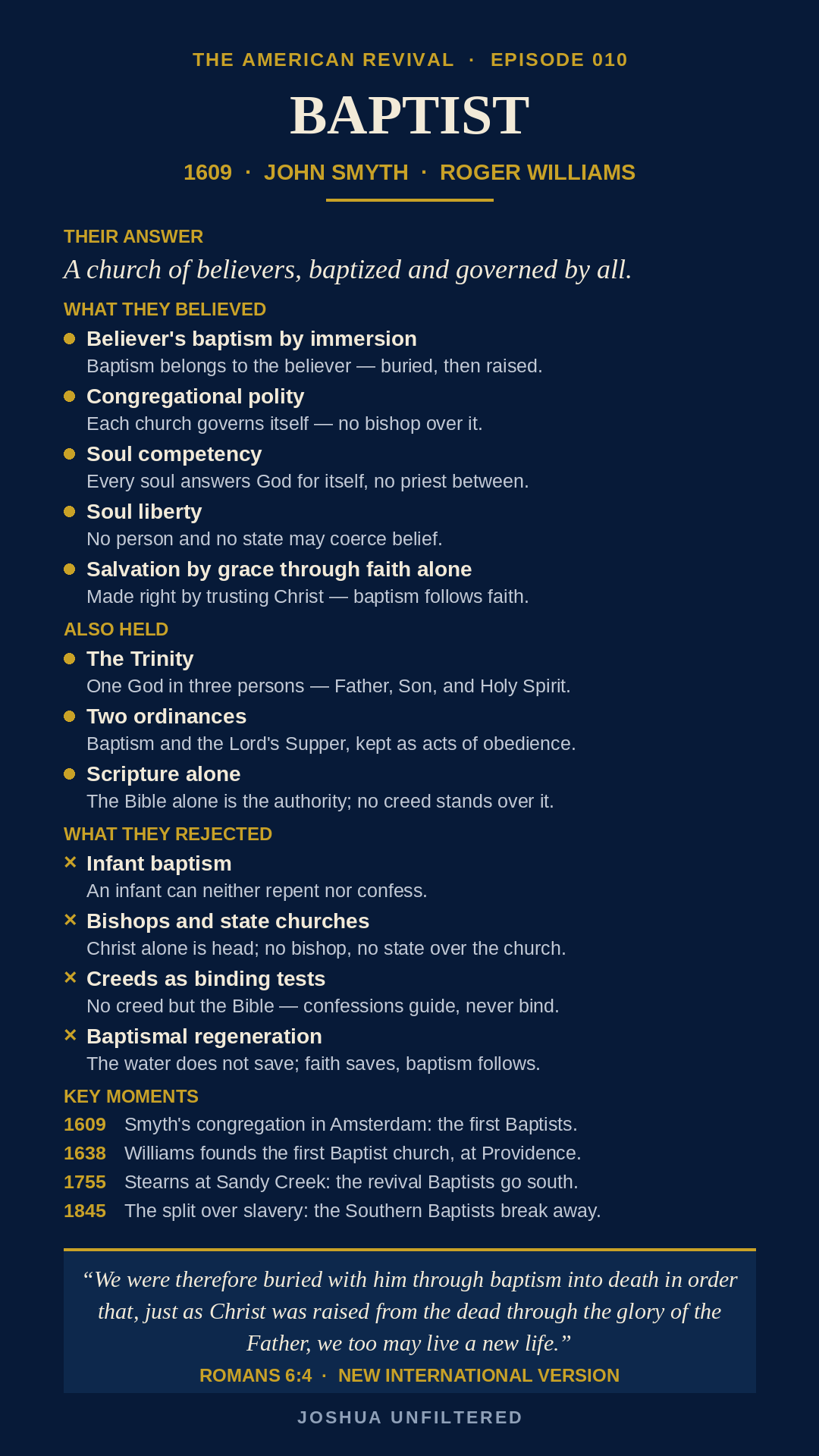
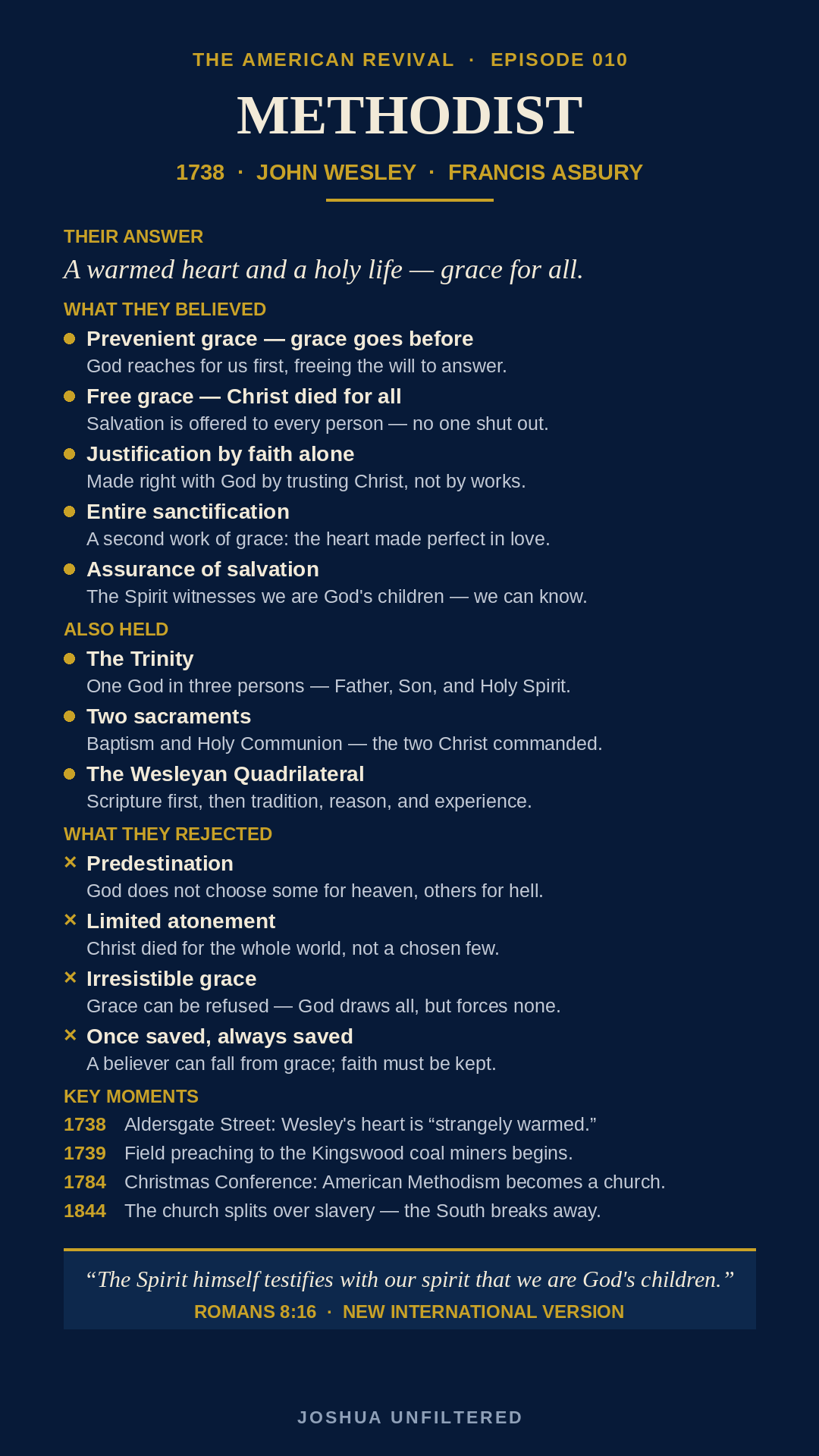
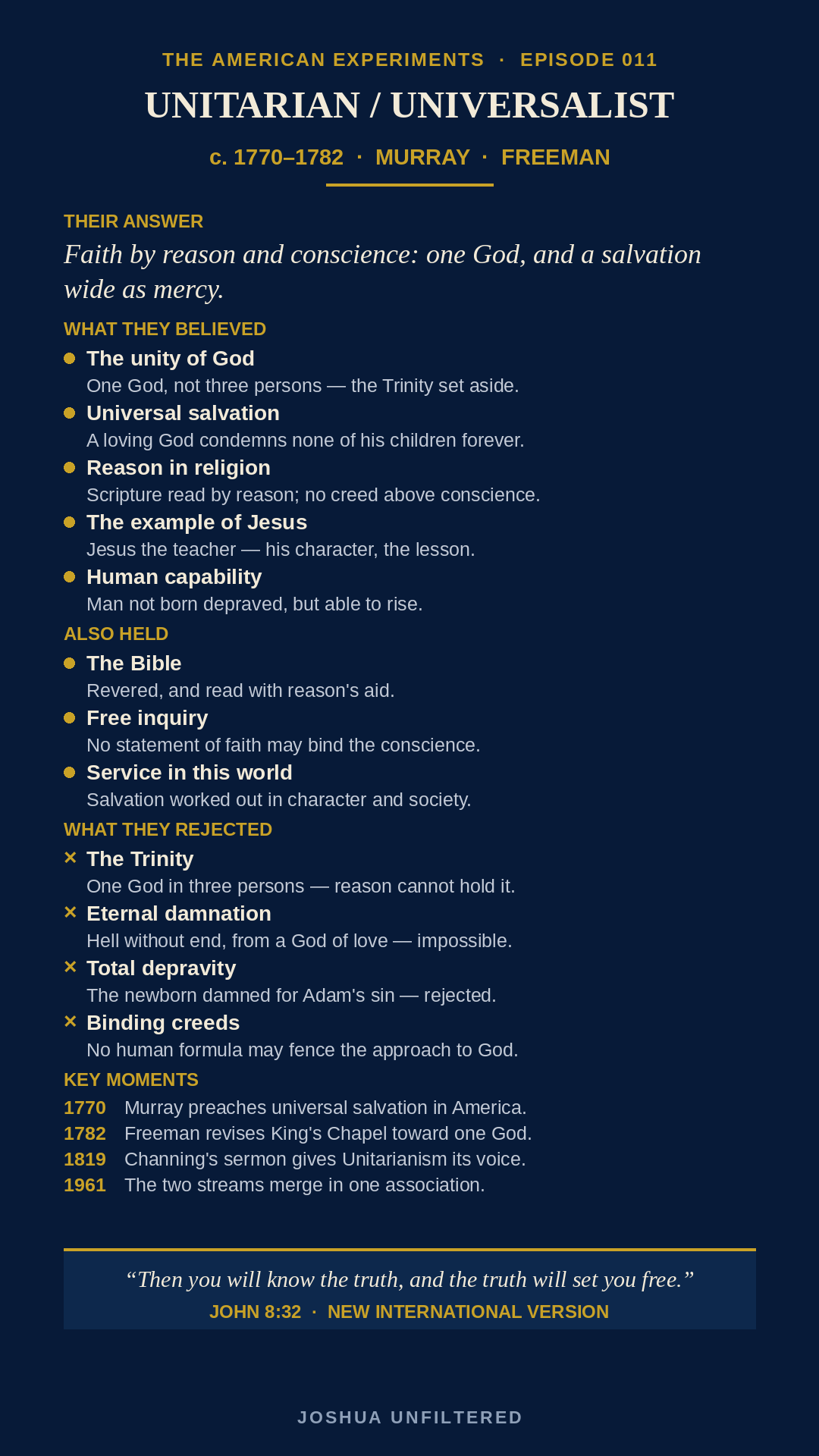
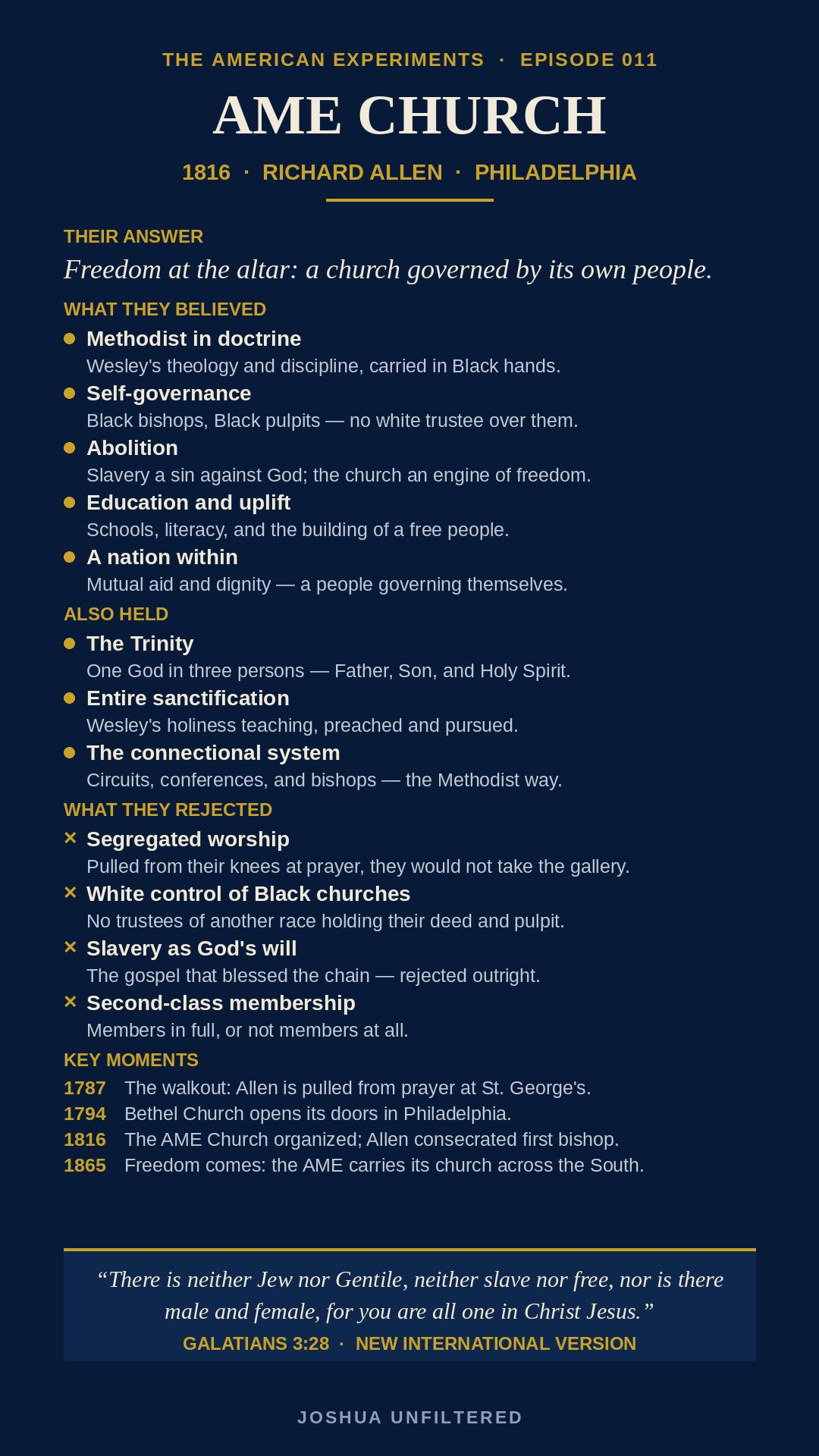
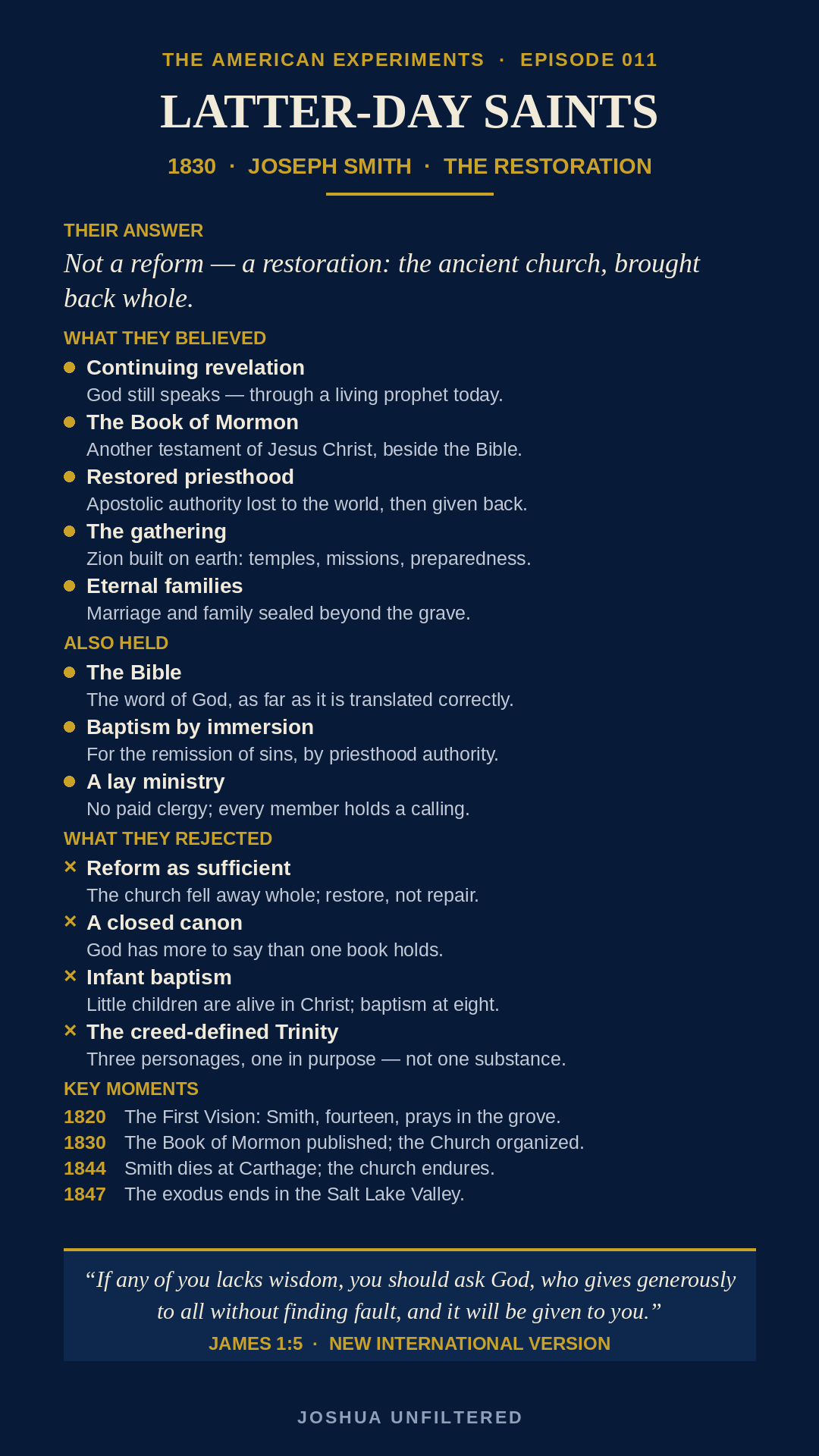
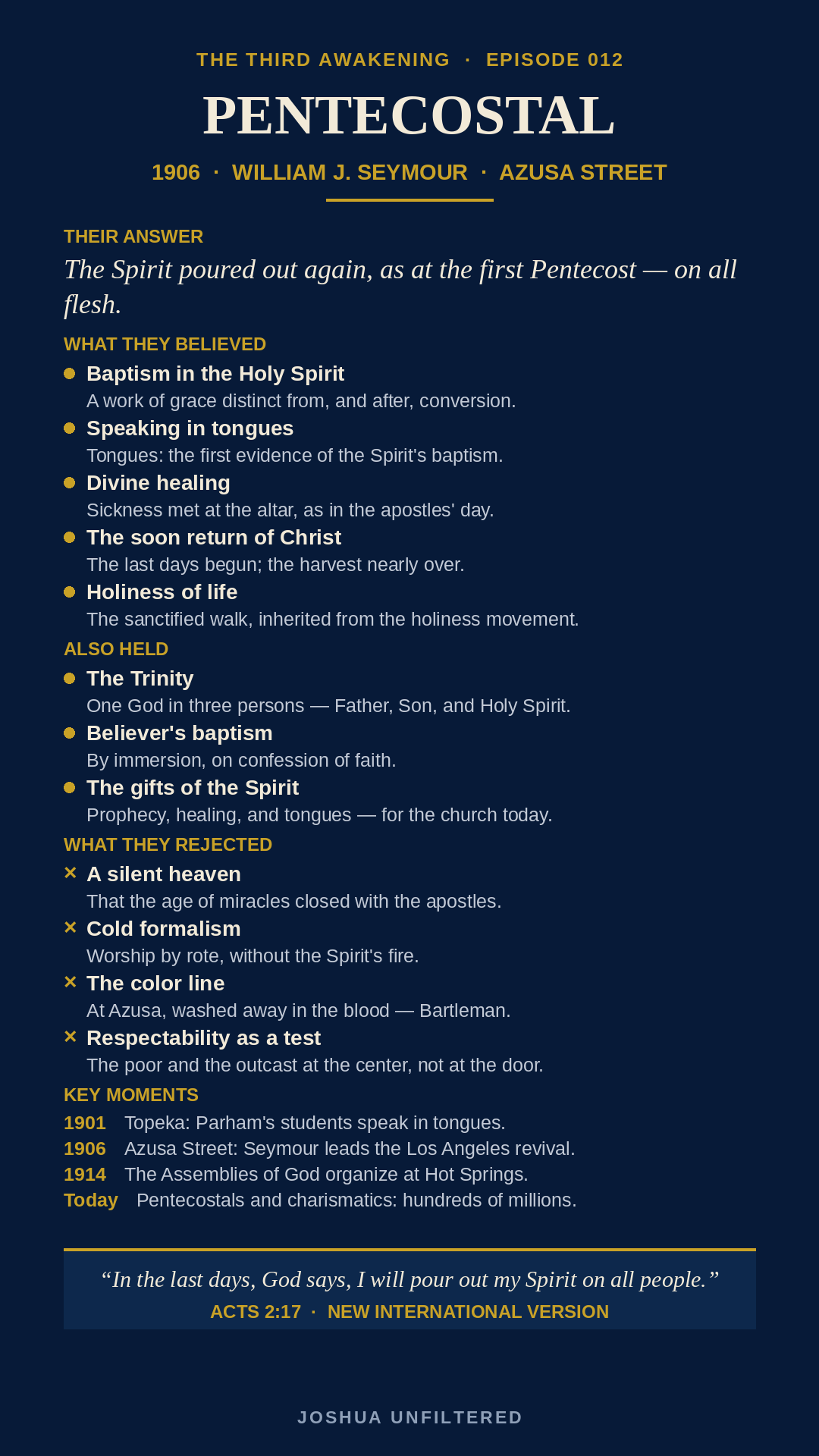
The families' counterparts — companion cards for the traditions the series meets on the American road, from Episodes 010, 011, and 012. Tap any card to open the full-size image.
Protestantism isn't a denomination — it's a family of churches born from one protest, defined by five 'alones,' and made American by a revival. Sir Joshua The Historian opens the Denominations Series with the word itself: a legal protest at Speyer in 1529, five solas, and the First Great Awakening.
One protest became four families. Sir Joshua The Historian meets the Lutherans, the Anglicans, the Presbyterians, and the Anabaptists — four answers to Rome, from Luther's faith alone and the Augsburg Confession to Richard Hooker giving the Elizabethan settlement its mind, Calvin's sovereignty of God, and the free church of believers only. Within a generation, the Peace of Augsburg wrote the first answer into law; a century later, Westphalia wrote three.
The Reformation families cross the ocean, and the Second Great Awakening makes American Protestantism. From the concert of prayer in 1794 to the thousands who fell at Cane Ridge in 1801, Sir Joshua The Historian tells how the Baptists and the Methodists — two churches built for the frontier — carried the revival west: circuit riders, camp meetings, Charles Finney and the new measures, and a benevolent empire that took up temperance and reform. But both churches split over slavery, and that shadow falls across the whole story.
The revival's children strike out on their own. Sir Joshua The Historian walks through the American experiments: the African Methodist Episcopal Church, born in a walkout at St. George's and carried south into the heart of slavery; the Black Baptists who gathered into the National Baptist Convention; the Unitarians and Universalists, who reasoned their way beyond the creeds; Joseph Smith and the Latter-day Saints, a restoration built to outlive its prophet; the Restoration Movement's plea of no creed but Christ; and the Millerites, who waited for the end on a date certain — and then had to live past it.
The Third Awakening closes the Denominations Series. Sir Joshua The Historian walks from the Fulton Street prayer meeting of 1857 — businessmen praying at noon while the banks failed — through Moody and Sankey's managed revival, to the fork where the age's faith divided: Carnegie's Gospel of Wealth against the Social Gospel of Gladden and Rauschenbusch. At the center stands Francis Bellamy, the Christian socialist minister who lost his pulpit and wrote the Pledge of Allegiance — and the salute that went with it. Then the other fork: holiness, Darby and Scofield's dispensations, Azusa Street, and the fracture of fundamentalism and modernism, before the long road lands at Calvary Chapel and the non-denominational church.